


In Asian cultures, particularly across East Asia, the dragon is one of the most powerful and fascinating mythical creatures. Deeply rooted in ancient mythology, history, and traditional art, this legendary being has long represented royalty, wisdom, prosperity, and supernatural power. It’s no surprise that dragon-inspired body art has remained popular throughout the region.
In contrast, dragons in many Western traditions are often portrayed as fearsome beasts associated with destruction, danger, and darkness.
So, why do these two cultures interpret the same mythical creature so differently? And what do these contrasting traditions mean when it comes to choosing a design? Let’s explore the history, symbolism, and different interpretations behind this fascinating subject.
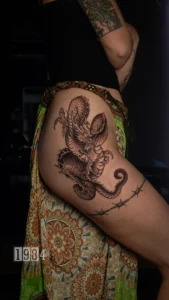
Origin & History
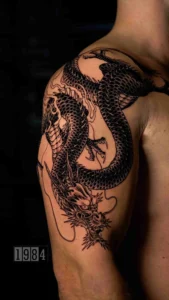
The word “dragon” traces its roots to the ancient Greek word drakon, which referred to a large serpent or mythical creature. Over centuries, the image of the dragon developed differently across civilizations, becoming one of the most recognizable figures in mythology around the world.
Eastern Dragons: Symbols of Power and Good Fortune
In East Asian mythology, dragons are generally regarded as benevolent and sacred beings. Unlike the fire-breathing monsters commonly seen in Western stories, Eastern dragons are often associated with water, rain, rivers, and the natural forces that sustain life.
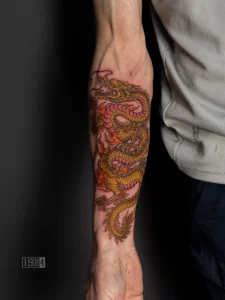
In Chinese culture, the dragon has traditionally represented imperial authority, prosperity, intelligence, and good fortune. It was closely associated with emperors, who used its image to symbolize their power and divine authority.
Japanese dragon imagery shares many similarities with Chinese traditions, although it has developed its own distinctive characteristics. Japanese dragons are often depicted with long, serpentine bodies, sharp claws, and elaborate scales. They frequently appear in traditional folklore as guardians of water and protectors of sacred places.
Dragon imagery also has a meaningful place in Vietnamese history. The dragon is one of the Four Sacred Animals in traditional Vietnamese culture and is closely connected to the nation’s identity. The legendary story of Lạc Long Quân and Âu Cơ, whose descendants were said to originate from the Dragon and the Fairy, reflects the creature’s importance in Vietnamese cultural heritage.
These historical and cultural connections have helped establish Eastern dragon designs as enduring symbols of strength, protection, prosperity, and spiritual significance.
Western Dragons: Creatures of Myth and Destruction
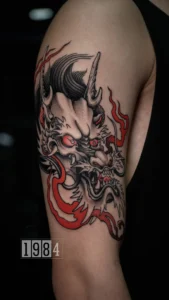
The Western interpretation is quite different.
In European mythology, dragons are commonly portrayed as enormous reptilian creatures with powerful wings, sharp claws, armored scales, and the ability to breathe fire. They are often depicted living in caves, guarding treasures, or threatening entire kingdoms.
In medieval European legends, dragons frequently represented chaos, greed, temptation, and evil. Their stories often involved brave knights or legendary heroes who had to defeat these dangerous creatures to protect their people.
Christian symbolism also contributed to this interpretation, with dragons sometimes representing Satan or the forces of darkness.
However, Western dragons are not always symbols of evil. In some modern fantasy traditions, they represent independence, ancient knowledge, strength, and untamed power.
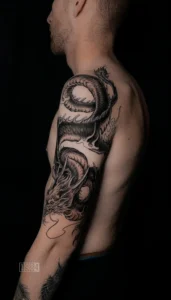
These cultural differences explain why Eastern and Western interpretations can produce such contrasting artistic styles. One often emphasizes harmony, spirituality, and good fortune, while the other explores danger, rebellion, and raw strength.
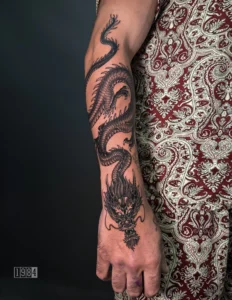
The Meaning Behind Dragon Tattoo Symbolism
Beyond their fascinating mythology, dragons carry layers of symbolic meaning that make them particularly appealing subjects for body art.
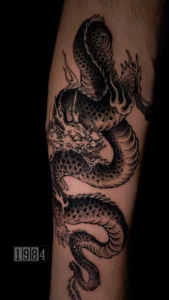
Depending on the cultural tradition and individual interpretation, these designs can represent:
- Power and Strength: As one of mythology’s most formidable creatures, the dragon symbolizes physical strength, authority, and the ability to overcome challenges.
- Wisdom and Intelligence: Particularly in Eastern traditions, dragons are associated with knowledge, spiritual awareness, and a deep understanding of the natural world.
- Protection and Good Fortune: Many Asian cultures view these mythical beings as guardians that bring prosperity, harmony, and protection against negative forces.
- Transformation and Balance: Dragons are often connected to powerful natural elements and opposing forces, making them symbols of change, balance, and the relationship between humanity and nature.
- Royalty and Authority: Historically associated with emperors and noble figures, their imagery can represent ambition, leadership, and personal strength.
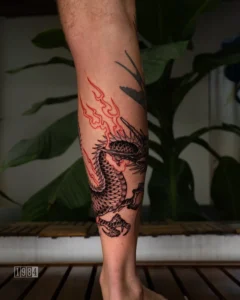
For many people, choosing this design is about more than its impressive appearance. It can be a personal reminder of resilience, confidence, ambition, or the values they want to carry throughout life.
Different Dragon Designs and Their Meanings
One of the most interesting aspects of dragon imagery is the incredible variety of forms found across different cultures. Each variation has its own visual characteristics and symbolic associations.
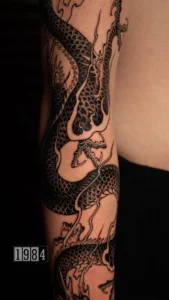
1. Chinese Dragon
The Chinese dragon is traditionally depicted with a long, serpentine body, four legs, prominent claws, and an expressive head. It is commonly associated with imperial authority, wisdom, prosperity, and good fortune.
2. Japanese Dragon
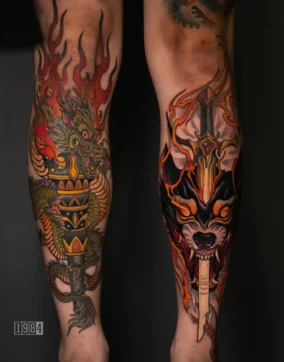
Japanese dragons often feature flowing bodies, intricate scales, and elaborate details. Their imagery is closely connected to water, protection, and spiritual power. They are particularly popular in traditional Japanese tattoo compositions, where they can extend across large areas of the body.
3. Horned Dragon
In Chinese mythology, the horned dragon, or Jiaolong in certain traditional interpretations, is associated with powerful dragon imagery. Different dragon classifications carry distinct meanings, so it’s worth researching the specific creature before choosing a design.
4. Western Dragon
With massive wings, muscular bodies, sharp claws, and fiery expressions, Western dragons create a much more aggressive visual impression. They are often chosen by people who appreciate darker aesthetics and designs that communicate strength, independence, and fearlessness.
5. Celestial Dragon
Celestial dragons appear in various East Asian mythological traditions and are associated with heavenly realms and supernatural power. In Chinese mythology, Tianlong, or Heavenly Dragon, is traditionally connected with the protection of celestial beings and divine spaces.

Colors and Their Symbolic Meanings
Color is another important element that can completely change the appearance and interpretation of a design.
In traditional Eastern-inspired artwork, certain colors are commonly associated with particular symbolic meanings:
- Black: Wisdom, mystery, strength, and experience.
- Red: Passion, vitality, courage, and good fortune.
- Gold: Wealth, prosperity, royalty, and divine authority.
- Green: Nature, growth, harmony, and renewal.
- Blue: Peace, spirituality, and the connection with water and the natural world.
These associations can vary depending on the culture and artistic tradition. Combining different shades can also create greater depth and individuality within the overall composition.
If you’re considering a design inspired by a particular mythology, researching its original symbolism can help you make a more meaningful choice.
Choosing a Design That Tells Your Story
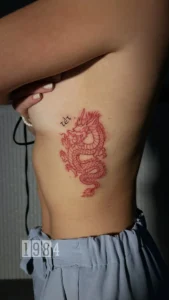
With such a rich history and so many artistic interpretations, choosing the right dragon design deserves some thought.
Before booking your session, take time to explore different cultural origins, visual styles, and symbolic meanings. Think about whether you’re drawn to the graceful appearance of Eastern dragons or the fierce and dramatic presence of their Western counterparts.
Placement and scale are equally important. Larger compositions often work beautifully across the back, chest, or sleeves, allowing artists to develop intricate details and flowing body shapes. Smaller interpretations can be adapted for the forearm, upper arm, or calf.
At 1984 Studio, our artists work with different tattoo styles and artistic influences to help turn your ideas into a design that feels personal. Whether you’re inspired by traditional Asian imagery or prefer a more contemporary interpretation, the right consultation can help bring your vision to life.
A meaningful tattoo should be something you’re proud to wear, not simply a design that catches your eye. Take your time, explore its origins, and let your chosen artwork reflect the story you want to tell.
For more captivating stories and inspiration from the world of tattooing, explore our Blog. You can also follow us on Facebook to discover more artwork, videos, and updates from our studios.
1984 Studio — Tattoo & Piercing | Est. 2015 | Hanoi · Huế · Hội An












 Hanoi:
37 Ma May, Hoan Kiem booking.hanoi@1984studios.vn
